
Literacy as a National Priority
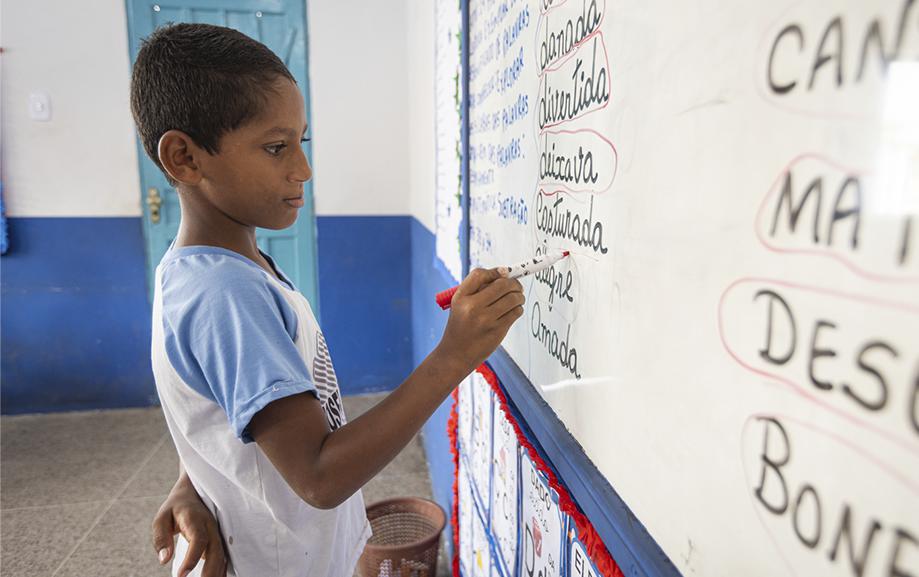 Student from the Vargem Grande municipal education network (MA).
CNCA Enshrined in State Policy
In 2025, literacy at the right age gained permanent legal footing with the passage of Law No. 15.247/2025, which enshrined the National Commitment to Literate Children (CNCA) as state policy.
The law guarantees dedicated funding, a solid legal foundation, and
intergovernmental cooperation across federal, state, and municipal levels to ensure literacy by the end of 2nd grade, in tight alignment with the National Education Plan (PNE). As a key technical partner, the Alliance for Literacy actively informed the legislative process, providing crucial contributions during Senate deliberations.
National Recognition for Literacy Leadership
The momentum behind the literacy agenda was further highlighted by public recognition of the leaders driving state-level progress. Under Resolution No. 8, the Federal Senate established the Governors’ Medal for Children’s Literacy at the Right Age (Comenda Governadores pela Alfabetização das Crianças na Idade Certa) to honor state leaders who have executed exceptional literacy policies.
Presented on October 13, 2025, on the Senate floor, the honors were awarded by an Independent Technical Committee comprising representatives from the Ministry of Education (MEC), UNESCO, the Senate, and civil society partners, including the Alliance for Literacy.
 Student from the Nova Venécia municipal education network (ES).
The National Education Plan (PNE)
Discussions surrounding the new National Education Plan (PNE) defined the educational agenda in 2025. Set to guide targets and guidelines for the 2025–2035 decade, the plan is one of the sector’s primary long-term planning instruments.
Key focus areas include literacy at the right age, inequality reduction, expansion of full-time education, strengthening teacher training, and datadriven educational management. Its drafting mobilized experts, public leaders, lawmakers, and civil society organizations around ambitious goals and implementation strategies.
We closely monitored and actively contributed to discussions on the new PNE in collaboration with partners, public administrators, and experts, reaffirming the vital importance of equitable learning and key actions to support the implementation and monitoring of educational policies.