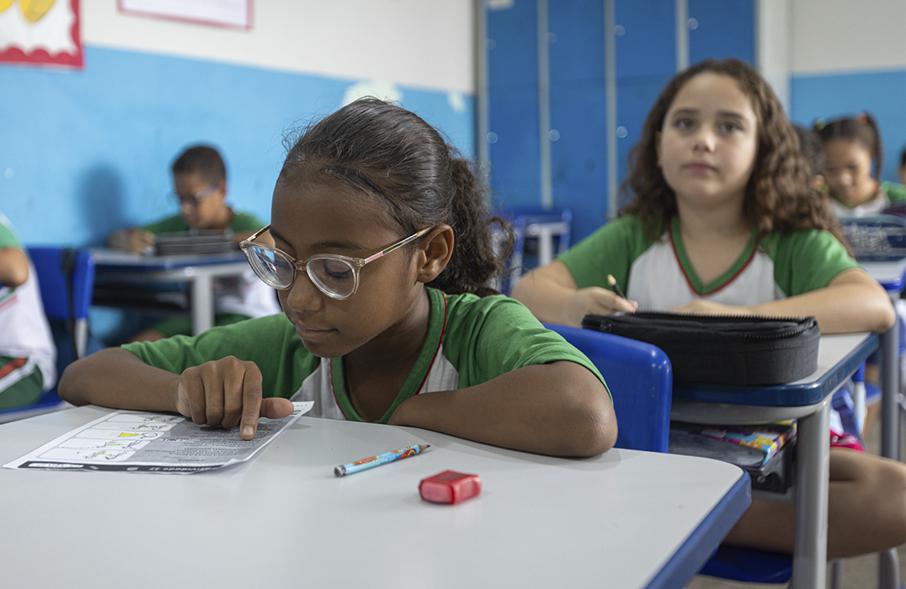
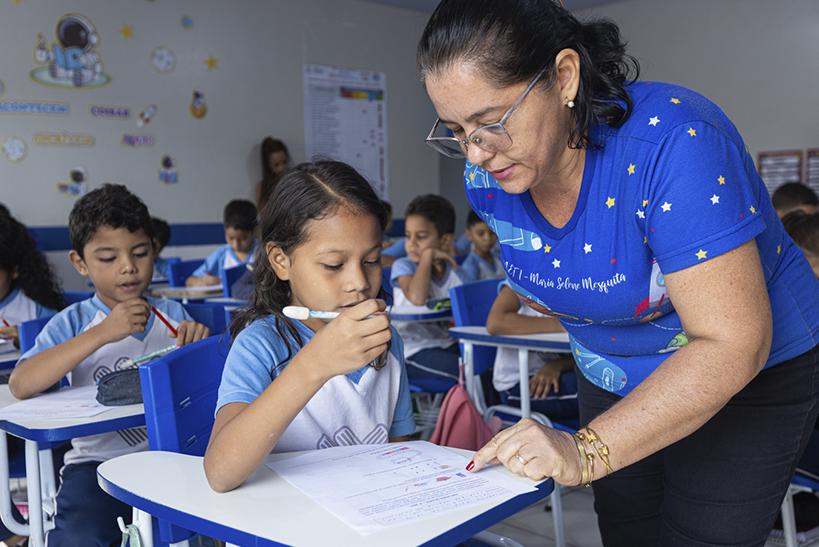
In 2025, Brazil reached a major milestone, surpassing its national literacy target for the first time. By the end of second grade, 66% of public-school students had achieved literacy, a 7 percentage point increase over the previous year. The National Commitment to Literate Children (CNCA) firmly established itself as a lasting state policy, underpinned by cross-level government collaboration. Initiatives targeting middle school education, full-day schooling, and mathematics proficiency also expanded in scale and depth across the country. This progress was driven by a coordinated, multi-sector effort among governments, education networks, administrators, teachers, civil society organizations, and researchers, all united around every child’s right to learn. Connectivity also advanced, with approximately 72% of public schools now equipped with high-speed internet.
Despite these gains, significant hurdles remain. Nearly a third of primary school students still leave the second grade lacking basic literacy, and stark regional disparities persist across states. Racial inequities remain equally significant: despite representing 68.8% of enrollment in the middle school, only 3 out of 10 Afro-Brazilian students reach adequate learning in 9th-grade mathematics.
The following pages detail the progress made across each of these areas. From early literacy and racial equity to mathematics and digital infrastructure, a clear pattern emerges: Brazil’s education system moves forward when stakeholders unite to create the conditions every student needs to thrive.